How to Adapt CBT Homework for Busy Clients

Some people juggle many duties and responsibilities.
You too will encounter a busy client who doesn’t have a daily thirty-minute slot for cognitive work. In fact, it’s safe to say that most mothers to young children do not have the free time or energy to invest in even a 10 minutes once a day. Asking them to wake up 30 minutes earlier, “for their mental health”, is going to achieve the exact opposite of what we want: a well rested and balanced individual.
Busy clients may have a five-minute slot during their lunch break, a five-minute slot before bed, maybe a five-minute slot on their commute, while sitting in traffic on the 101.
The CBT homework you give them has to fit those slots, not the time frames you wish they had.
The first move is to stop giving them a single but very long weekly assignment. Send three short forms instead:
A morning form that takes ninety seconds to fill in on the train.
A midday form that fits a lunch break.
An evening form that fits the wind-down routine.
If the homework you give them is in context and supportive of their daily routines, they will certainly do them. Just like they keep updating their shopping list, filling out a thought record while stuck in traffic is a gentle release of pressure exactly when they need it most.
Each form in that strategy is like a small bite. Maybe two sliders, or one short tag, even the optional voice note using the speech-to-text on their phone.
The key is to make it so easy and practical to use, that the total time per submission can be under two minutes. Preferably, under 30 seconds.
Across a week, three ultra-short forms a day produces twenty-one data points, within context and keeps that client engaged with their therapy process.
Compare this approach to your regular single long weekly assignment: it produces one data point. Clients typically postpone doing it until the last second, if at all bothering with it, and then it captures a condensed translation of their entire week. Not the most useful information for you to work with.
When you orient your homework assignments to the client’s needs, the shape of what you can see in the case file is dramatically different than you’re used to.
You can read trend lines, time-of-day patterns, weekday-versus-weekend differences, things that would be invisible from a single Sunday-evening retrospective.
All within the case file of your my-cbt portal
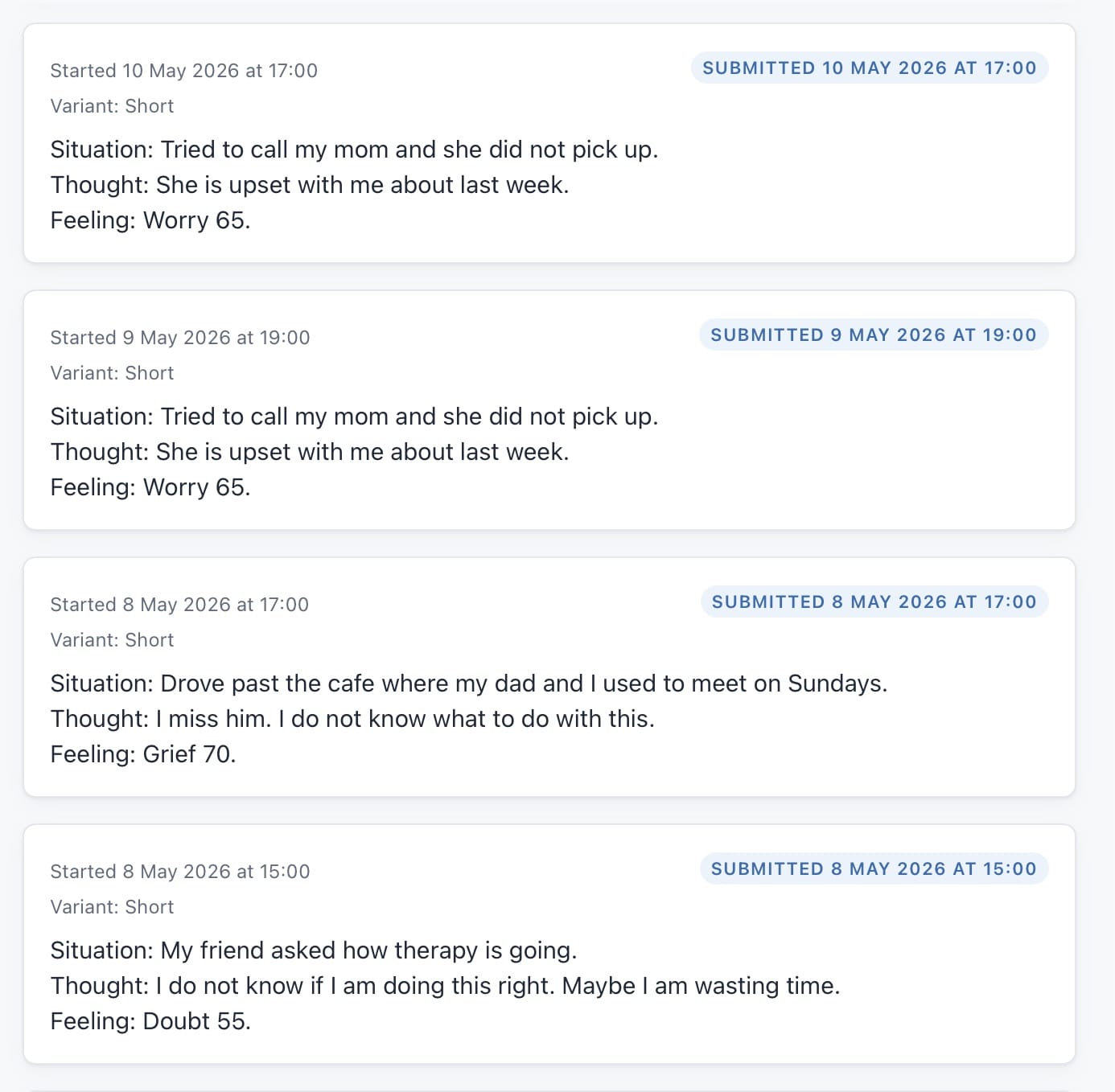
For the busy client specifically, the small but frequent option works because each individual entry costs almost nothing. It’s on their phone. They open the form, tap two sliders, dictate a sentence, hit submit.
They didn’t have to find time. They used time they already had.
In fact, many clients report back that it gives them a welcoming distraction from being upset at the slow traffic or bored while waiting for their check-up at the dental clinic.
Reward your clients for investing a minute
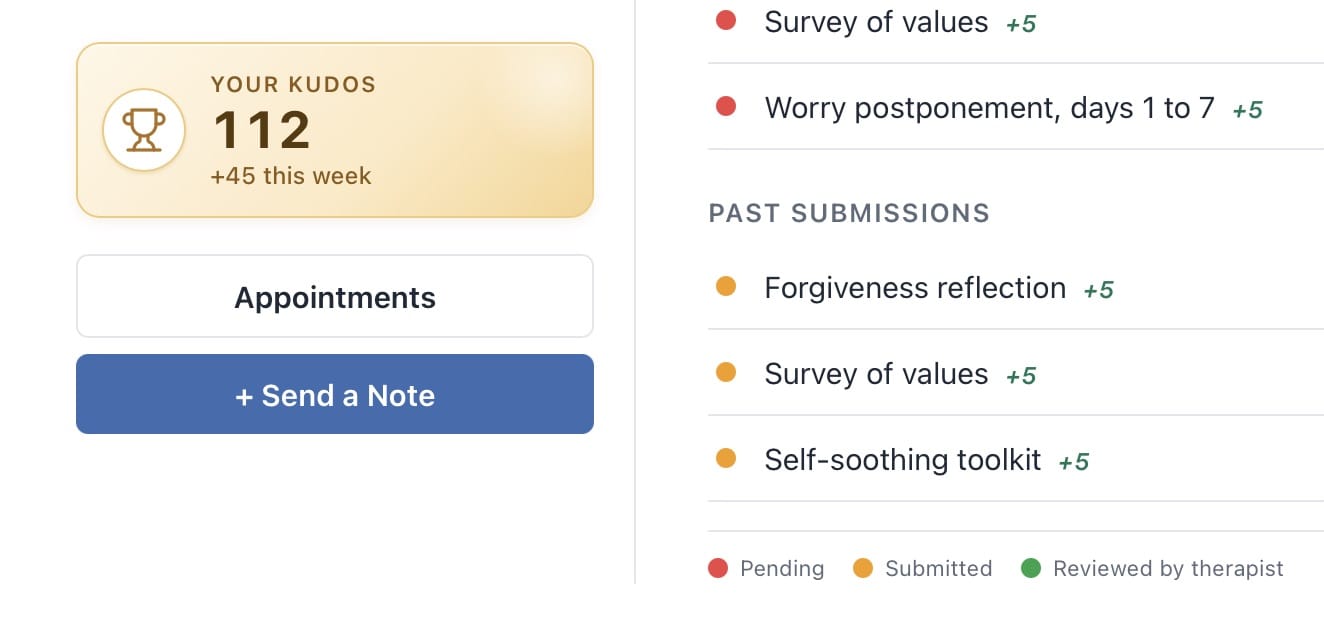
The combination of small tasks, that take only a few seconds, and a reward system is highly effective. Turn on the Kudos option for clients that may enjoy collecting points.
The Kudos rewards stack across the day. Three submissions equals fifteen points. The visible total in the portal climbs through the week, which gives the client a small running sense of accomplishment that survives even on weeks where they can’t do anything else for therapy.
For busy clients, frequency wins. Make it easy on them, and they’ll reward you back with fewer cancellations and more referrals.