How Therapists Cope With Self-Judgment After Mistakes

What happens when you miss something obvious in session, and you’ve been chewing on it for three days?
The self-judgment after a clinical mistake has a specific emotional texture. The mistake replays in our mind. You feel the heat of it. You imagine the supervision conversation that would expose it. You wonder if the client will leave, if word will spread, if this is the one that proves you’re not as good as you thought. The judgment is loud and circular. Instead of teaching us to improve, as it should under perfect conditions, it produces shame.
The way out is to convert the mistake into a clinical lesson. That doesn’t mean pretending it didn’t happen. It means giving it a place to exist other than your private mental replay loop. When you spit it out of your mind and keep it in a secured space, it loses its grip on your short term memory. All you have to do is remind yourself that you can access it anytime by opening the client’s file.
Here’s my way of doing it:
Write down what happened in three lines. Keep it short and sweet (KISS):
The clinical decision you made.
The information you missed or misweighted.
The decision a more experienced version of you would have made instead.
Tell the client at the next session, if it’s repairable.
“I’ve been thinking about last week. I think I went past something important. Can we come back to it.”
The repair is often clinically powerful. The model the client takes from it is a therapist who notices details, recognizes patterns, and adjusts.
Update your case formulation.
The mistake usually points at something missing in the case formulation. That’s why in my-cbt you have a carefully designed Case Formulation wizard in every case file.

Work thorugh it, and your next session can then be built on the corrected version.
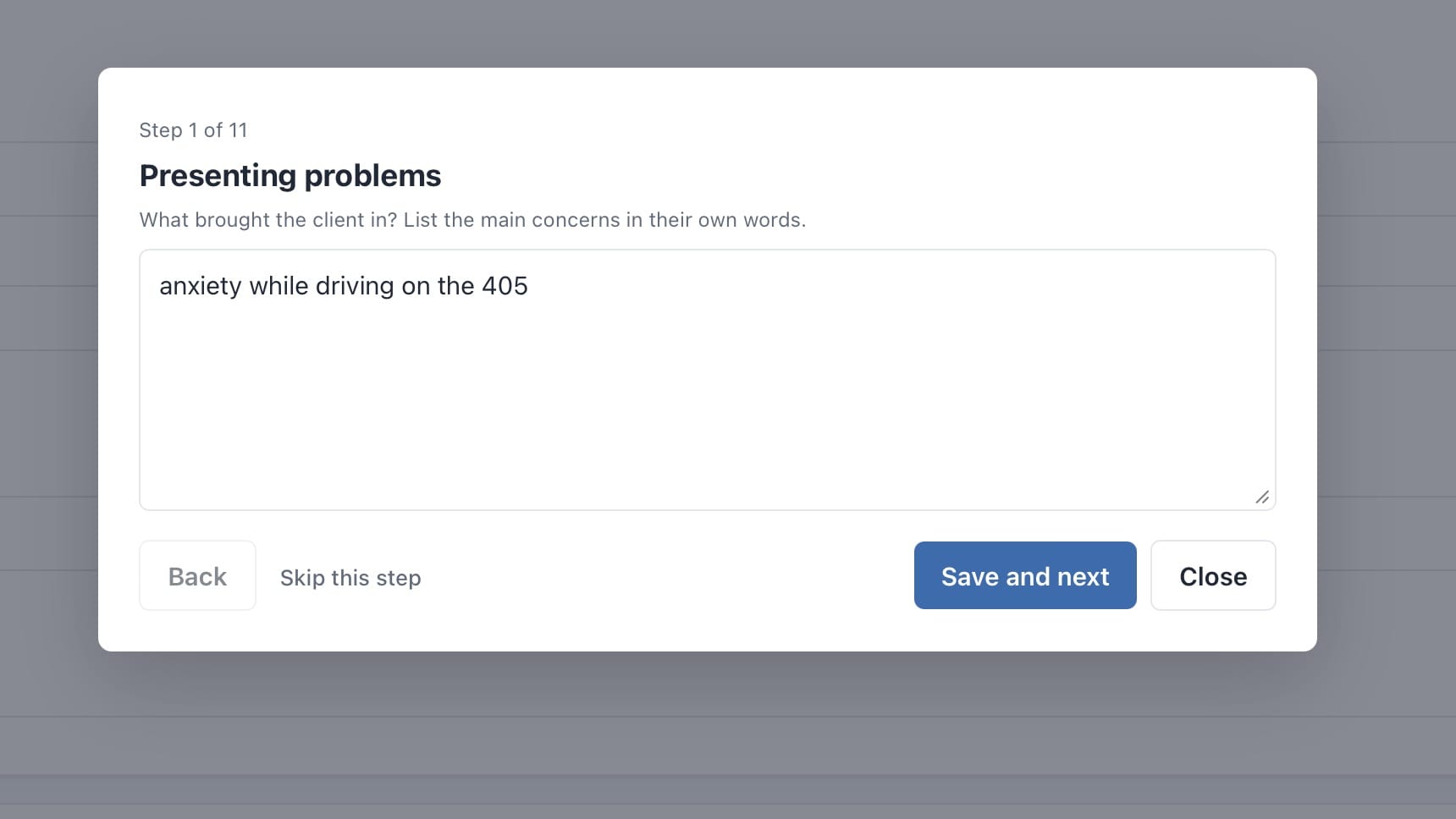
The self-judgment resolves faster when the mistake has been processed into something usable to you. The lingering shame that would have shaped the next sessions gets converted into a piece of clinical learning. The learning gets acknowledged and stored in the file and informs your future work. The shame has done its part and now has no more reason to exist.
Some mistakes don’t have a clean lesson. The lesson is just that you’re a human doing high-stakes work and you missed something. Learn from it and move on.