How to Use Homework for Clients Who Avoid Feelings

A client who avoids feelings will not fill in a feelings worksheet. The form that asks “what was the emotion you were experiencing” will come back blank, or filled in with “I don’t know,” or with something so generic it carries no information. They’re not being difficult.
The cognitive task you’re asking for is one they can’t perform yet.
The homework that works with this client routes around the emotion-naming step. The form asks for what the client can observe directly: body sensations, behaviours, timing, what they were doing when something shifted.
A body-sensation log has three fields.
Where in the body the sensation was.
How intense 0-10.
One short note on what was happening externally.
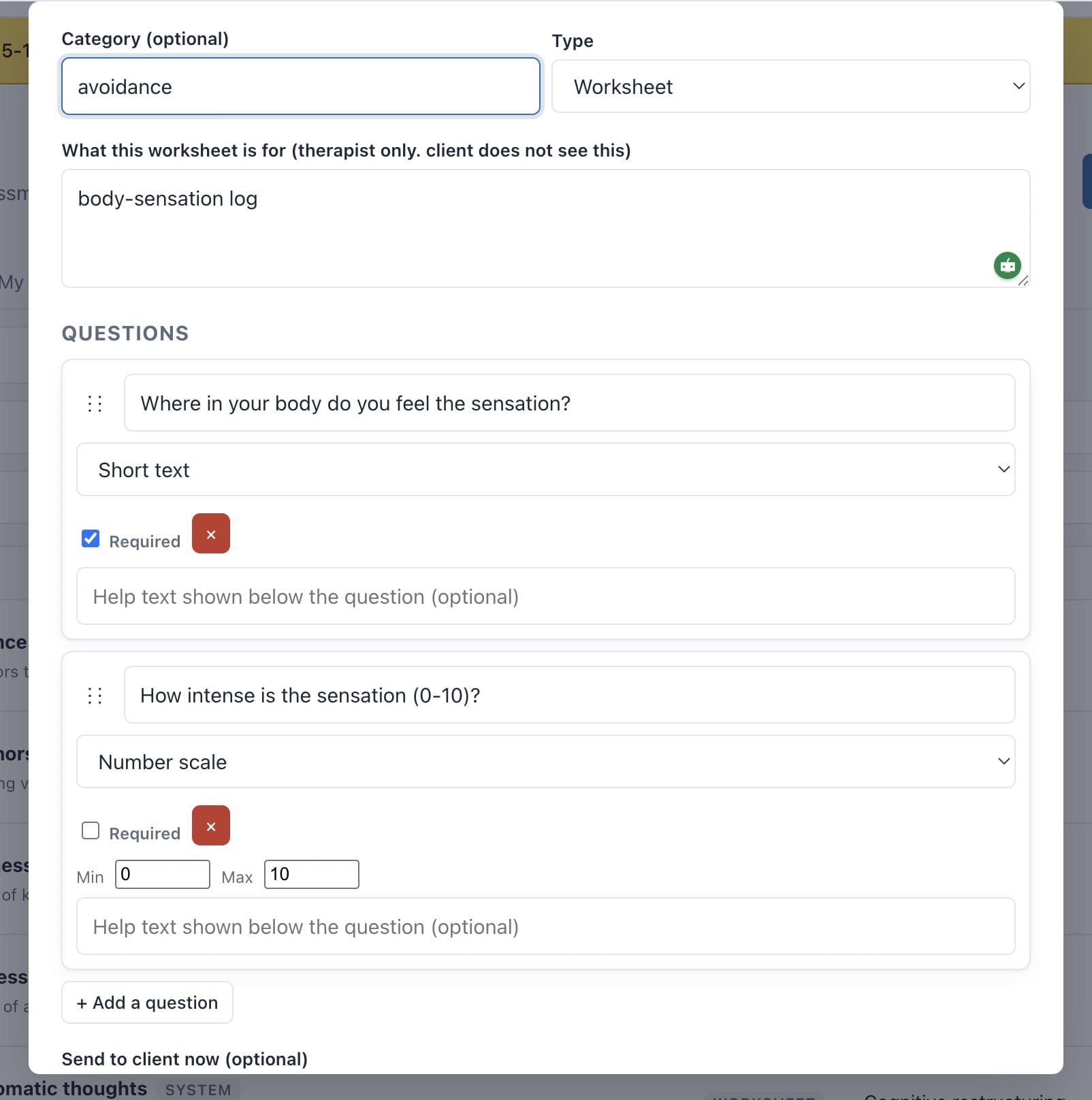
The client doesn’t have to name an emotion to fill it in. They have to notice the body, which is a softer ask than naming a feeling.
A behaviour-shift log has different fields. What you were doing. What you started doing instead. Time of the shift. Three fields, all observational. Again, no emotion-naming required.
Across two or three weeks of these logs, patterns emerge that can be read together in session. “Most of your body-sensation entries with chest tightness happened in the late afternoon. What’s usually happening then?” The conversation in session does the emotion-identification work that the form couldn’t.
You’re not skipping emotion work. You’re sequencing it differently.
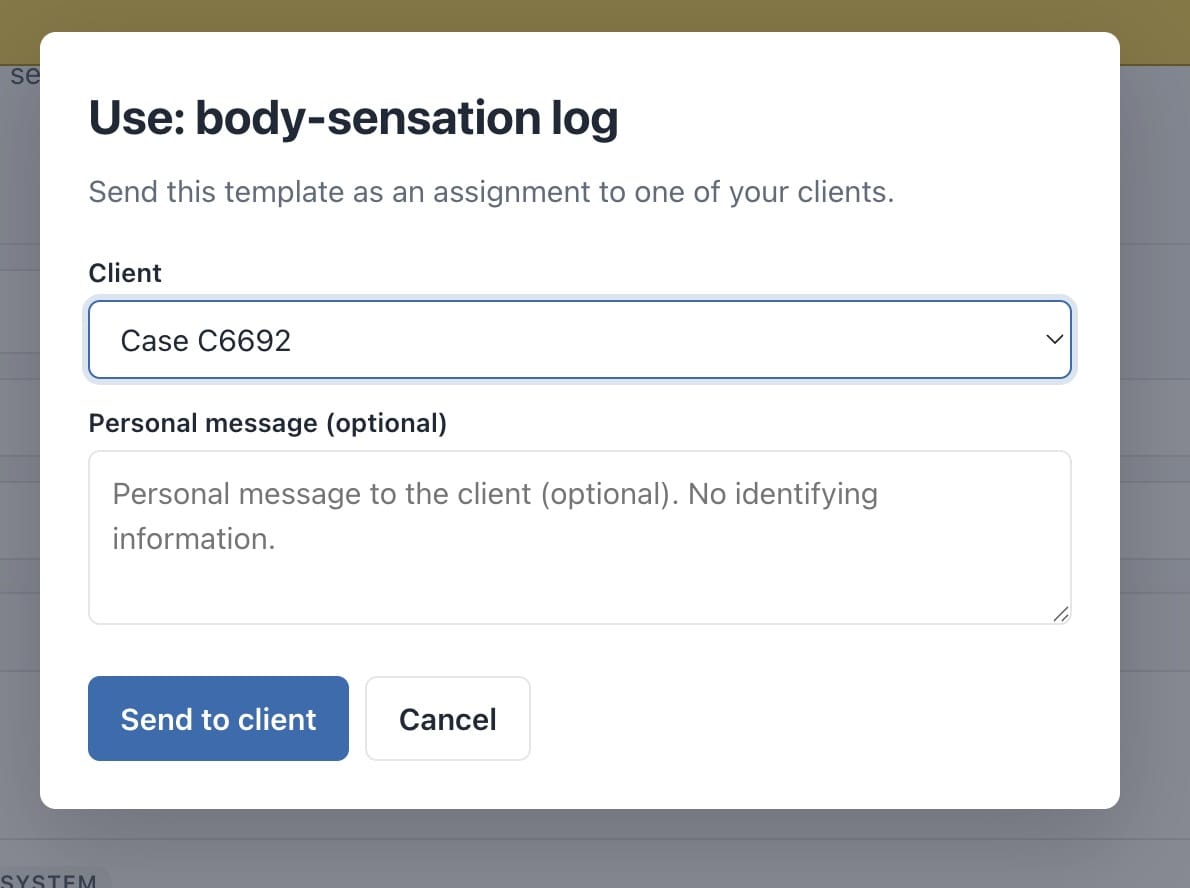
The form gives you the data to do the emotion work in session, where you can hold the affective weight your client can’t yet hold alone.
In my-cbt, the worksheet builder supports the body-sensation and behaviour-shift formats with sliders, multi-select for sensation type, and short-text fields for context. Build them once. Use them with the clients whose emotion vocabulary isn’t accessible yet.
The Kudos system also helps with these clients.
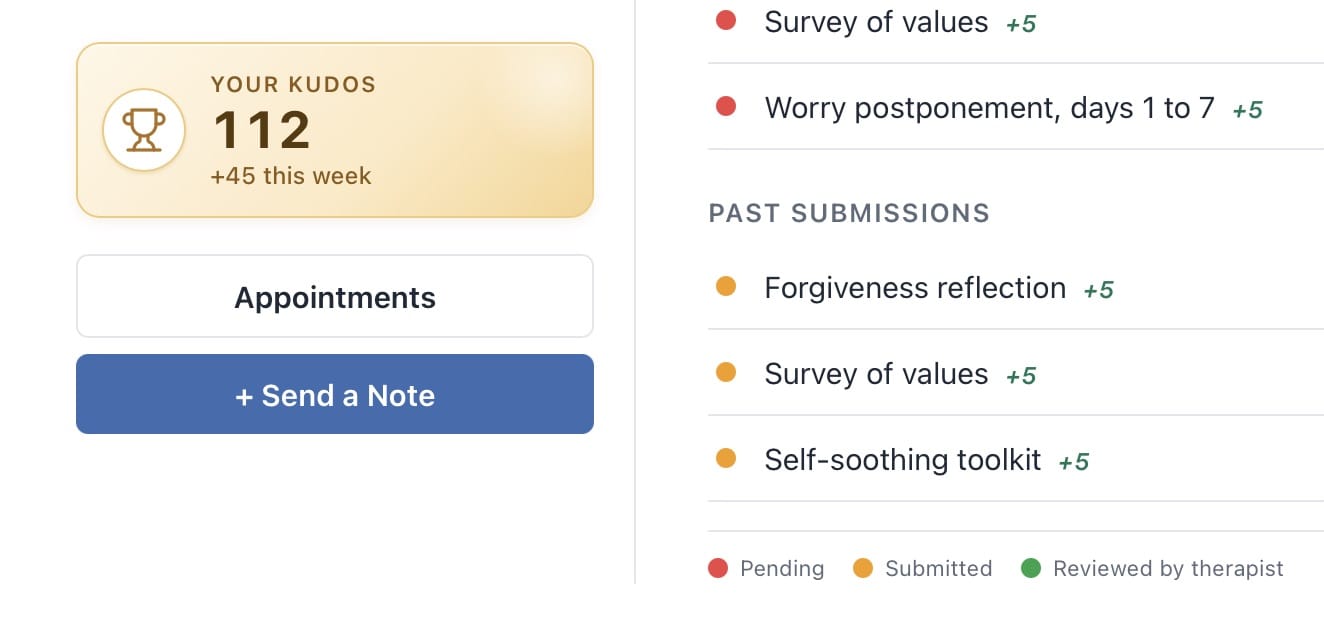
The visible reward for completing the body log gives them a non-emotional reason to engage with the form. They’re tracking sensations and earning points, not labelling feelings. Across weeks, the engagement with the body data builds the curiosity that emotion work eventually grows out of.
Don’t push the form to ask for what the client can’t give. Build the form around what they can observe, and let the emotional layer emerge when there’s enough data to stand on.