Why Therapists Suck at Marketing Their Private Practice

Marketing your practice probably sits in an uncomfortable spot for you. The discomfort you experience certainly isn’t laziness or low confidence. You’re hard working and you know how to help a person in distress.
It’s just that the standard marketing playbook was built for sales-driven contexts and applying it to therapy feels wrong, because it is wrong.
Here’s a list of marketing clichés that may have hurt your practice already:
Pop-up email captures.
Newsletter form with a “free report” promise.
“Limited time offer” copy.
Urgency-driven landing pages.
Testimonials with smiling faces.
Funnel-optimisation language.
And one of the most common and problematic sales tactic I see in my clients:
- A package deal: 6 sessions for the price of 5.
Each of those has its place in some industries.
None of them fit the kind of clinical work you want to be associated with, and trying to use them on your own website makes the whole practice feel slightly off.
The reframe that works is to stop calling it marketing and start calling it publishing useful information.
The two activities are drastically different.
Publishing useful information looks like:
Writing service pages that describe specific clinical patterns in plain language.
Writing articles on the topics prospective clients are actually searching for.
Updating your directory profile with a current photo and a clear specialty list.
Sending a quarterly note to professional contacts about your current openings.
None of these activities feel like sales.
They feel like normal professional communication. They provide proof of expertise. It is the evidence your potential clients are looking for. When they first come to your website, you are a stranger to them. Your degrees and credentials are dots on the screen.
These people want to trust you, and they just need a valid reason.
The conversion from visitor to a booked client still happens.
A visitor reads your service page on panic, recognises themselves, and then books a consultation.
A colleague reads your quarterly note, remembers a case that fits your specialty, and then sends a referral.
The directory visitor finds your profile, reads your warm personal message and your specialty list, and then inquires.
The same outcomes that traditional marketing produces, without the activities that feel uncomfortable.
This isn’t a way to avoid the essential outreach aspect of running a private practice. The publishing-useful-information approach takes time. Service pages need to be written properly. Articles need to be drafted with a clear purpose and voice. Directory profiles need to be maintained. Outreach mail or emails need to be sent. The investment of time and effort is continuous. What changes is the felt sense of the work. Instead of plastering a brochure online and expecting the whole world to be impressed by it, or wasting your savings on Google ads, you focus on creating value for others, the kind of value that earns the trust of strangers and fills up your caseload.
What also helps is recognising that value-driven visibility is essential. A therapist with a clean professional online presence is doing a service to prospective clients who need to find them. This kind of visibility is not self-promotion in the bad sense. You’re not trying to convince anyone to book a session because of your degrees. It’s about making yourself findable for the people who need your specific kind of help.
Everything in my-cbt is built for this purpose. For example:
The booking widget on your website captures inquiries from any of your published surfaces.
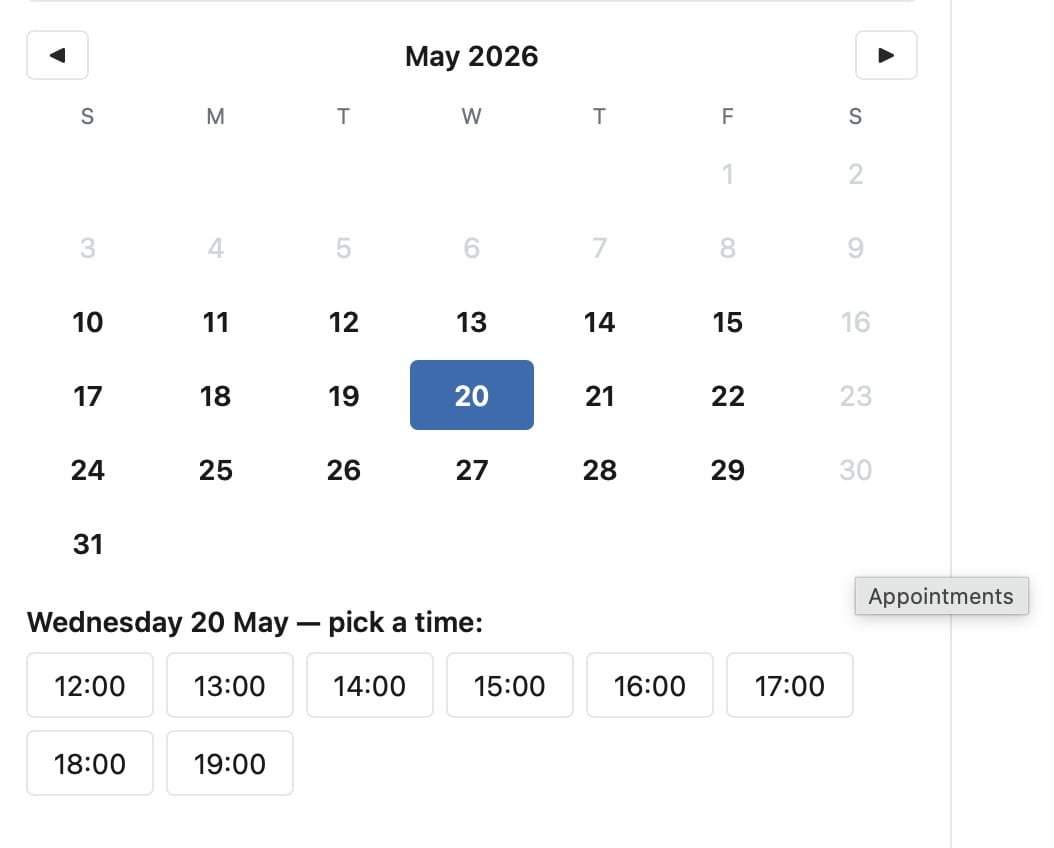
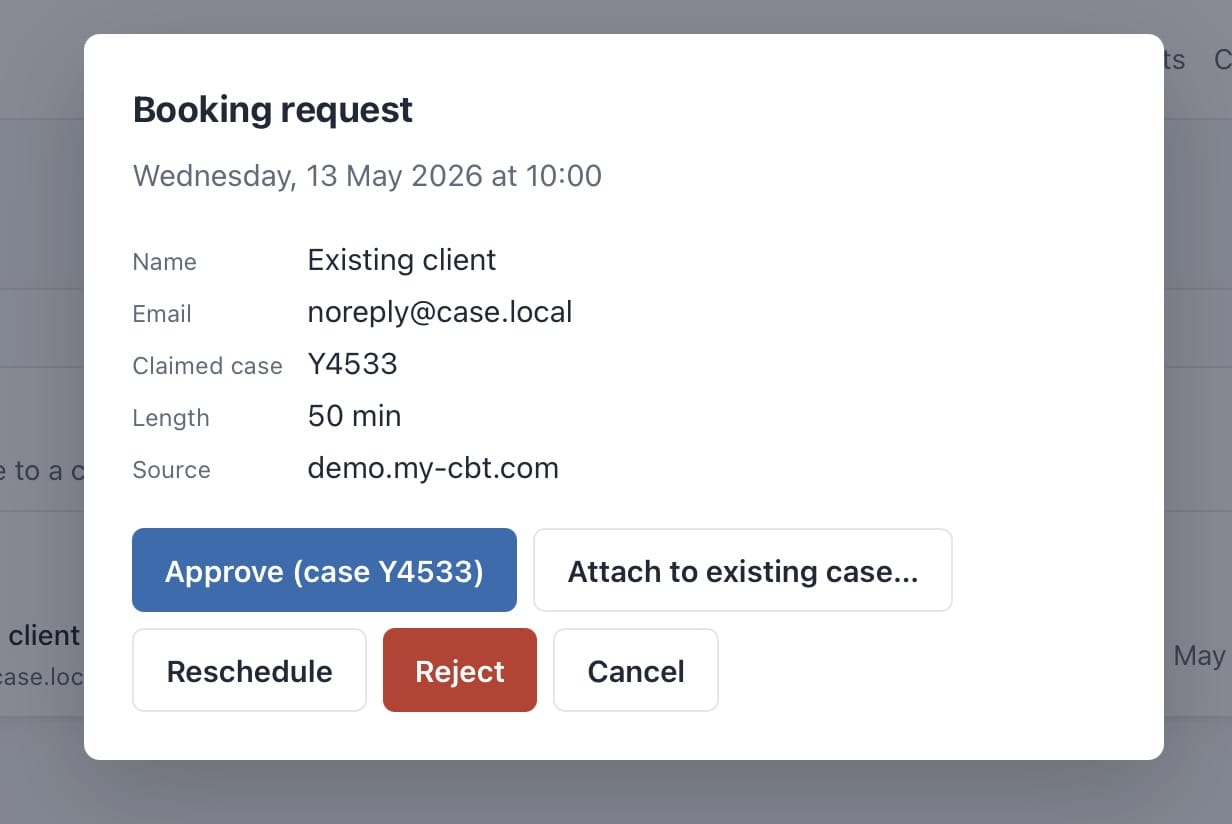
You get a notification in your portal and a booking request
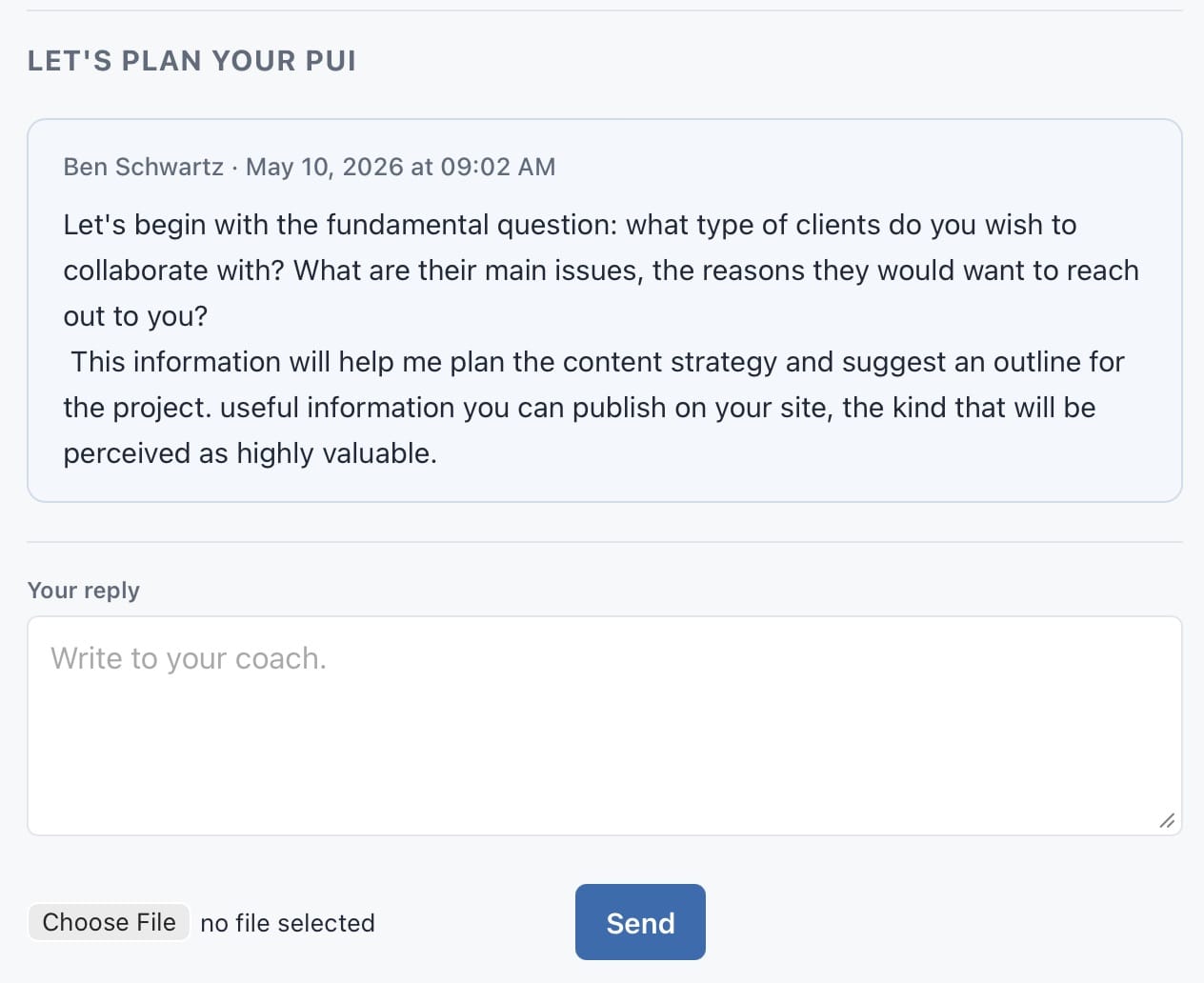
You can delegate the publishing-useful-information tasks to your business coach
The discomfort to “market yourself” goes away when the activity itself changes.
Publishing useful information about the work you do produces inquiries reliably and feels like normal professional life. The “marketing” frame can stay in the file marked “things I’d rather not do.” The actual work is something different.