Why Therapists Overwork Themselves

Overwork in private practice is usually due to drift, not a conscious decision. Each yes to a new client makes sense in the moment. The cumulative pattern, the year ending with a heavier schedule than it started, doesn’t get chosen. It accumulates underneath you.
Three forces tend to be running underneath the accumulating burnout:
Income variability
Last year’s slow month was financially rough and you haven’t forgotten it.
Saying yes to a new inquiry feels like insurance against another one.
The insurance accumulates across the year and the schedule fills.
Helper identity
Saying no to a person in distress conflicts with the role of being someone who helps.
The internal experience of refusing a referral feels worse than the external experience of taking the case.
The case you took because the alternative is something the helper-identity you hold can’t tolerate.
Quiet belief in your own indispensability
- You think, partly correctly, that you’re the right therapist for this particular case.
If you don’t take her, the question of where she’ll go has no clean answer. So you take her, and a month later your Friday afternoon was already at capacity before the new case got squeezed in.
How to avoid a burnout?
What changes the pattern is setting your cap when you’re rested and holding it against the live pull when you’re not.
Eighteen clinical hours, or twenty, or twenty-two, whatever your number is.
The cap is decided in writing during your annual leave week, when you have perspective.
When the new inquiry arrives and the helper-pull is loud, the decision was already made in advance.
You read what rested-you wrote and you act on it. If it’s max-18, and you’re already keeping 18 sessions a week, you refer the new case or postpone it.
The complementary structure is a waitlist for inquiries that arrive over the cap. A working waitlist gives the new person a queue with real movement.
Three or four clients move out of the practice each quarter on standard treatment ends, and the people on the waitlist take those slots in order or pre-set priority. When you tell the new inquiry “I don’t have a slot now, I expect to in eight to ten weeks, would you like to be on the list,” you’re not abandoning the case. You’re being honest about the timeline.
In my-cbt, you can set your weekly work hours in the Settings:
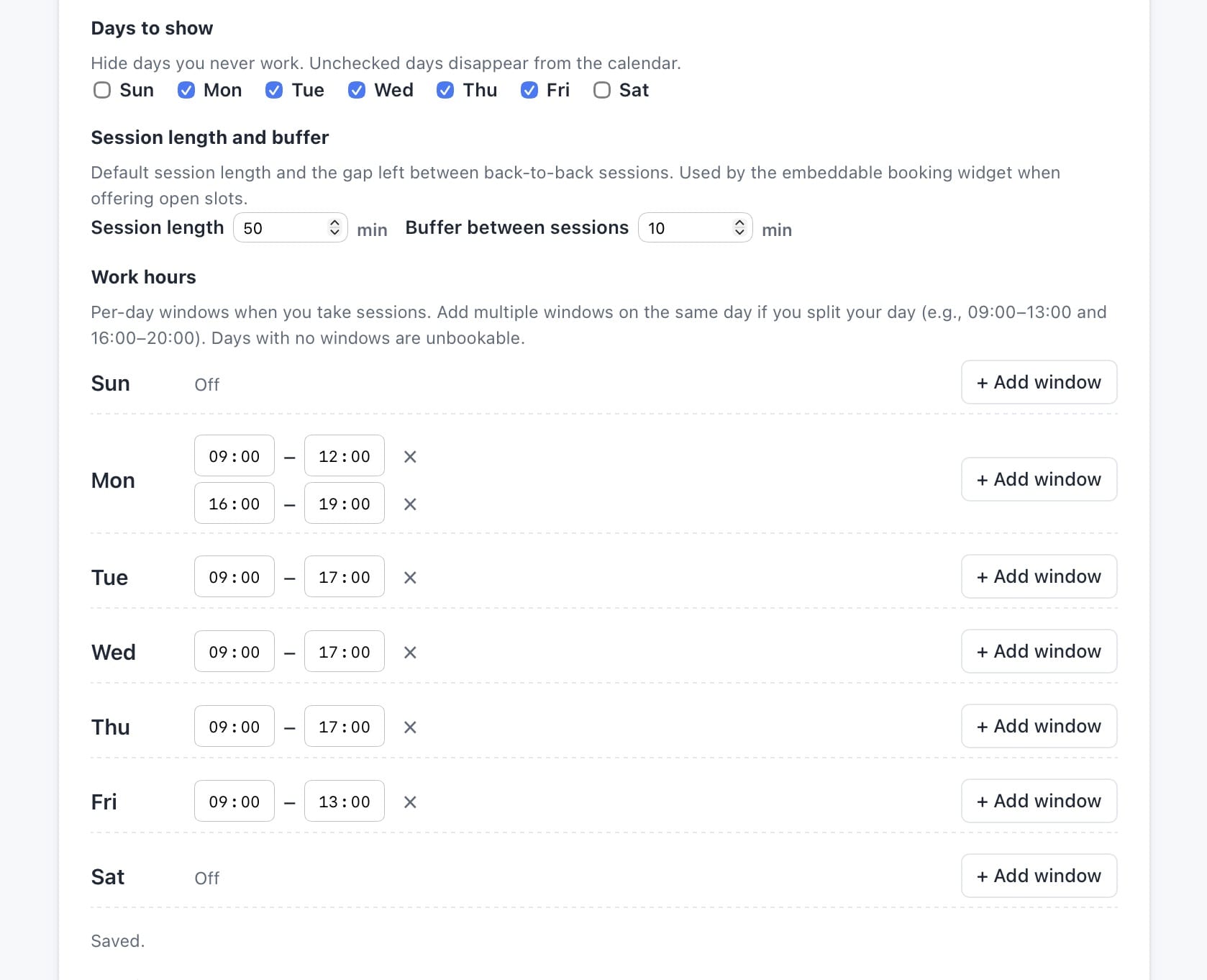
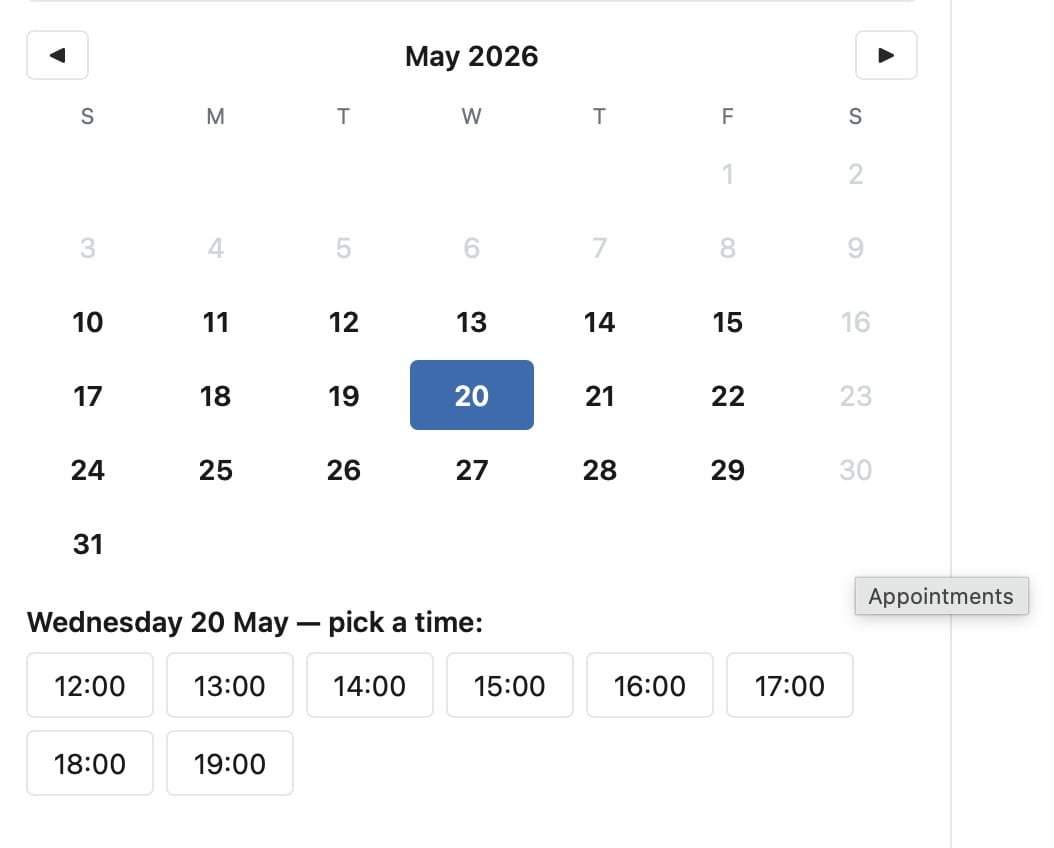
The booking widget on your domain shows only the slots you’ve made available, so it can’t book past your weekly cap. It also prevent double-booking for existing sessions.
Learn more: creating and keeping a functional therapy waitlist).
The cap is your protection against burnout. The waitlist is the answer for the people who would otherwise push you past it. Set both up while you’re rested. The future version of you needs them.